Buying a Van as a Sole Trader: Tax Benefits Explained
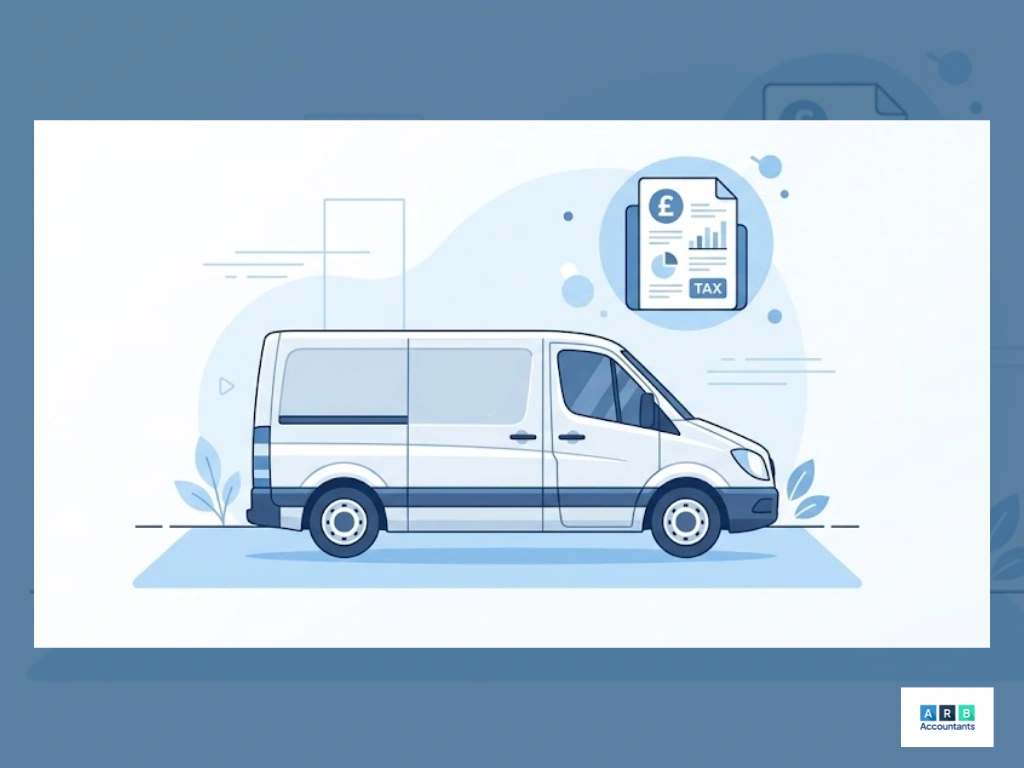
Why Buying a Van as a Sole Trader Is Treated Differently to a Car
HMRC distinguishes between vans and cars, which directly impacts tax relief eligibility. HMRC defines a van as a goods vehicle primarily designed for transporting goods rather than passengers, with a payload of at least one tonne. Vans are classified as plant and machinery, qualifying for the Annual Investment Allowance and potentially full deduction in the purchase year. Cars follow stricter capital allowance rules based on CO2 emissions with relief spread over multiple years.
Is a Van 100% Tax Deductible for a Sole Trader?
Generally yes. The deductibility hinges on two factors: whether the vehicle meets HMRC’s commercial vehicle criteria and the proportion used for business purposes. The Annual Investment Allowance permits deducting up to £1,000,000 in qualifying capital expenditure annually. For vehicles with mixed use, you can only claim the proportion of the cost that reflects business use.
How Van Capital Allowances Work for Sole Traders
Three primary routes exist for claiming capital allowances:
Annual Investment Allowance (AIA): Allows full cost deduction (up to £1 million) in the purchase year for both new and used vans.
Writing Down Allowances (WDA): Provides gradual recovery at 18% yearly on a reducing balance if the AIA is not used.
First Year Allowance: Offers 100% deduction for new zero-emission vans regardless of AIA status.
How Much Can I Claim for My Van If I Am Self-Employed?
The claimable amount depends on purchase price, business-use percentage, acquisition method, and chosen allowance route.
Outright Purchase: Claiming the full price through AIA in the same tax year reduces income tax and Class 4 National Insurance.
Hire Purchase: HMRC treats the transaction as a purchase from first use date, allowing immediate capital allowances on full vehicle value.
Leasing: You cannot claim capital allowances on leased vehicles. Instead, deduct annual lease payments as business expenses.
Running Costs You Can Claim:
- Fuel (business portion)
- Vehicle insurance
- Servicing, repairs, and MOT fees
- Road tax and breakdown cover
- Finance agreement interest
VAT on Van Purchases: What You Need to Know
For VAT-registered traders, commercial van VAT is typically fully recoverable if used exclusively for business. Unlike cars, the VAT on a commercial van can usually be reclaimed in full, provided the van is used solely for business. Mixed-use scenarios allow recovery of only the business-use proportion.
Common Mistakes to Avoid When Buying a Van as a Sole Trader
Vehicle Misclassification: Purchasing vehicles HMRC does not classify as commercial vans prevents AIA access.
Ignoring Private Use: Commuting from home to a fixed workplace is not business use. Claims must adjust accordingly.
Wrong Accounting Basis: Cash-basis traders treat costs as simple expenses; accruals-basis traders claim through formal capital allowances.
Missing the Claim: Tax relief does not apply automatically. Active Self Assessment claim submission is required.
Poor Timing: Large AIA deductions in low-profit years may yield suboptimal results. Spreading relief via writing down allowances sometimes produces better outcomes.
A Final Word on Buying a Van as a Sole Trader
Van acquisition represents one of the most tax-efficient capital purchases for self-employed individuals. The combination of Annual Investment Allowance, allowable running costs, and VAT recovery substantially reduces the vehicle’s effective cost.
Frequently Asked Questions
Does buying a van as a sole trader qualify for the Annual Investment Allowance?
Yes. Commercial vehicles meeting HMRC’s goods vehicle definition qualify for the AIA, allowing full deduction of purchase costs (up to £1 million) in the acquisition year. Both new and used vans qualify.
Is a van 100% tax deductible for a sole trader?
Yes, provided the vehicle meets HMRC commercial vehicle standards. The critical factor is business use proportion. Exclusive business use means full deductibility; mixed-use requires proportional adjustment. Claims must be made through Self Assessment returns.
What records does HMRC expect for a van?
Maintain detailed mileage logs showing dates, destinations, purposes, and distances. Keep purchase invoices and finance documentation. When personal use exists, logs must clearly separate business from private mileage.
Can I claim capital allowances on a second-hand van?
Yes. The Annual Investment Allowance applies to both new and second-hand vehicles. Your purchase price becomes the basis for claiming.
What happens when I sell the van?
A balancing charge may apply if you sell for more than the tax written-down value. Conversely, selling below that value may entitle you to additional deductions.
Why might claiming the full AIA not always be the best option?
Taking complete relief in one year works poorly when profits are unusually low, as large deductions may exceed taxable income. Spreading relief across multiple years using writing down allowances sometimes produces superior overall results.
About The Author

Saurabh Bedi | Director
Saurabh is a tax advisor at ARB Accountants, specialising in Self-Assessment and small business tax. He's dedicated to making tax simple and stress-free, helping clients stay compliant and confident with HMRC.
Qualifications & Experience
- Fellow of Chartered Certified Accountants (ACCA)
- MSc Chartered Certified Accountancy 2008
- Working in accountancy since 2008