Side Hustle Tax UK: Rules, Allowances and How Much You'll Pay (2026 Guide)
What is side hustle tax in the UK?
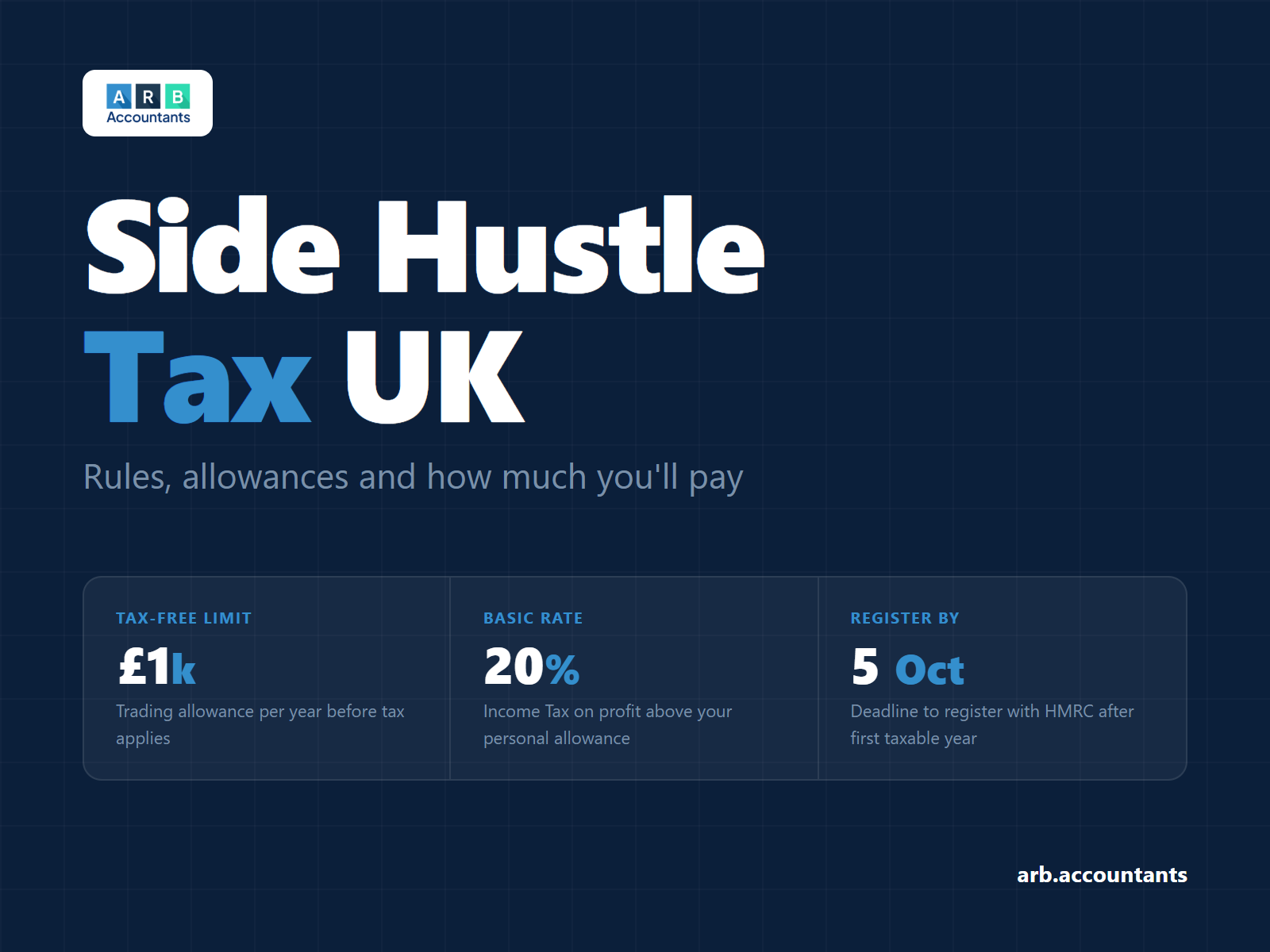
There is no separate "side hustle tax" in the UK. It is ordinary Income Tax, and National Insurance if you are self-employed, applied to money you make outside your main job. Everyone gets a £1,000 tax-free trading allowance each tax year across all their side hustles combined. Go over that and you will usually need to register with HMRC and pay tax on the profit, on top of whatever you already pay through your main job.
Side Hustle Tax in 2026 at a Glance
- £1,000 tax-free trading allowance per tax year, shared across all your side hustles, not one each.
- Register for Self Assessment by 5 October if you owe tax on side hustle income for the first time.
- Digital platforms like Vinted, eBay, Etsy and Depop must report your sales to HMRC if you sell 30 or more items, or earn over roughly £1,735 (approximately €2,000), in a year.
- A reform is coming that could let you earn up to £3,000 without filing a full Self Assessment return, but not before 2029, and it will not change how much tax you owe.
- Selling your own unwanted belongings is generally not taxable at all — this only applies if you are trading.
What Is Side Hustle Tax in the UK?
A side hustle is any income you make outside your main job, and HMRC treats it the same as any other income once it goes over your allowances. That covers a wide range of activities: buying or making things to sell, providing a service like dog walking, tutoring or delivery driving, working multiple jobs for yourself, creating content online, and renting out property or a room.
If you are on PAYE for your main job, your side hustle is not covered by that automatically. Your employer only reports what they pay you, not what you earn elsewhere, so it is your responsibility to tell HMRC about the rest.
The Side Hustle Tax Allowance UK: How the £1,000 Trading Allowance Works
Everyone gets a £1,000 tax-free trading allowance each tax year, and it applies to your gross income before expenses, not your profit. If your total side hustle income across everything you do is £1,000 or less, you generally do not need to tell HMRC or pay tax on it.
Crucially, it is one allowance across all your side hustles combined, not £1,000 for each one. If you earn £800 from content creation and £500 selling crafts online, that is £1,300 in total, over the £1,000 limit, even though neither activity alone crossed it.
Property income has its own, separate £1,000 allowance. If you have both trading and property income, you get £1,000 for each.
How Much Tax Will You Pay on a Side Hustle in the UK?
Your side hustle profit is added to your other taxable income, including your PAYE salary, and the combined total decides which tax bands apply. It is not taxed in isolation.
Everyone has a £12,570 Personal Allowance covering their first £12,570 of total income tax-free. Above that, the basic rate of 20% applies up to £50,270 of combined income, the higher rate of 40% applies from £50,271 to £125,140, and the additional rate of 45% applies above that.
If you are self-employed, Class 4 National Insurance is also due on profit: 6% on profit between £12,570 and £50,270, and 2% above that.
For example: someone earning a £30,000 salary with a £4,500 side hustle profit has already used their Personal Allowance through PAYE, so the £4,500 is taxed at the basic rate, roughly £900 in extra Income Tax, plus a small amount of Class 4 National Insurance. If that same side hustle profit had instead pushed their combined income past £50,270, the portion above that line would be taxed at 40% instead.
Do Vinted, eBay, Etsy and Depop Report You to HMRC?
Yes, if you sell enough. Since 2024, digital platforms have had to report seller information to HMRC under international rules the UK signed up to through the OECD. The reporting threshold is selling 30 or more items, or earning more than roughly €2,000 (about £1,735) in a year, whichever comes first.
This does not create a new tax, it just changes how HMRC finds out. Whether you owe tax was already decided by the trading rules above. If you are genuinely just clearing out your wardrobe or garage, occasional personal sales are not taxable regardless of what a platform reports.
When and How to Register With HMRC
If you owe tax on side hustle income, you need to register for Self Assessment by 5 October following the end of the tax year in which you started earning it. The UK tax year runs 6 April to 5 April.
Once registered, you will need to file a Self Assessment return every year you have taxable side hustle income. The online filing and payment deadline is 31 January after the end of the tax year; the paper deadline is earlier, 31 October. Miss the filing deadline and there is an automatic £100 penalty, rising the longer it is left, plus interest on anything paid late.
UK Side Hustle Tax Reform: What’s Actually Changing
You may have heard you will not need to do anything until you earn £3,000 — that is not true yet. HMRC has explicitly said so. What is actually happening is a reform to how side hustle income between £1,000 and £3,000 gets reported, not a change to how much tax you owe.
Right now, cross £1,000 and you need to register for full Self Assessment. Under the reform the government has announced, that will change to a three-tier system:
- Earn £1,000 or less: nothing changes, no action needed.
- Earn between £1,000 and £3,000: you will still need to tell HMRC and pay any tax due, but through a new, simplified online service instead of a full Self Assessment return.
- Earn more than £3,000: you will still need to file a full Self Assessment return, exactly as now.
The government expects around 300,000 people to no longer need to file a full return once this is live. The catch is timing: it is expected within this parliament, which could be as late as 2029, and the simplified online tool has not launched yet. For the 2026 tax year, the existing £1,000 rule is still what applies.
The same three-tier approach is expected to apply to property income too, once it launches.
Selling Your Own Stuff vs Trading: What Counts as a Side Hustle
Selling your own unwanted belongings is usually not taxable at all. Clearing out old clothes, books or furniture you have owned and used is not trading — it is just having a clear-out — and it does not count toward the £1,000 allowance or need declaring.
You are trading, and the allowance and Self Assessment rules apply, if you are regularly buying or making things specifically to sell on for a profit, or regularly selling your services. The test HMRC applies looks at your intention (are you doing it to make a profit), how often you do it, and whether you are operating in a business-like way.
One separate consideration: if you sell a personal possession you owned and used yourself for £6,000 or more, that can trigger Capital Gains Tax even though it is not trading income. It is a different tax with its own rules, worth knowing about if you are selling anything of significant value.
Renting Out a Room or Property on the Side
Property income has its own £1,000 tax-free allowance, separate from the trading allowance, so if you have both types of income you get £1,000 for each. This covers renting out a property or part of your home, including short lets through platforms like Airbnb.
If you are letting a furnished room in your own main home, the Rent a Room scheme is usually more generous: up to £7,500 tax-free a year, halved to £3,750 if you share the income with someone else, such as a partner. Rent a Room and the property allowance work differently, so it is worth checking which applies to your situation rather than assuming.
What Happens If You Don’t Declare Side Hustle Income
Ignoring it does not make it invisible. HMRC has told major platforms to share seller data, and undeclared side hustle income is part of what it calls the hidden economy, an area it is actively working to close. If HMRC finds tax you should have declared, expect a bill for the tax owed plus interest, and usually a penalty on top. The amount depends on why it was not declared and how quickly you come forward.
If you already know you should have declared income from previous years, the safer route is almost always a voluntary disclosure before HMRC contacts you first. Penalties are consistently lower for unprompted disclosures than for the same error found by HMRC.
Frequently Asked Questions
What is side hustle tax in the UK?
There is no separate side hustle tax. It is ordinary Income Tax, and National Insurance if you are self-employed, applied to income you make outside your main job once it goes over your £1,000 trading allowance.
How much tax do I pay on a side hustle in the UK?
Your side hustle profit is added to your other income to work out your tax band. After your £12,570 Personal Allowance, it is taxed at 20% up to £50,270 of combined income, 40% up to £125,140, and 45% above that, plus Class 4 National Insurance if you are self-employed.
What is the side hustle tax allowance in the UK?
It is £1,000 a year, tax-free, covering your gross side hustle income before expenses. It is a single allowance across all your side hustles combined, not one per activity. Property income has its own separate £1,000 allowance.
Do I need to tell HMRC about a side hustle earning under £1,000?
Generally no. If your total trading income for the year is £1,000 or less, you do not usually need to register or file a return for it.
Is there a UK side hustle tax reform coming?
Yes. The government plans to let people earning between £1,000 and £3,000 report and pay through a simplified online tool instead of full Self Assessment. It does not change how much tax is owed and is not live yet. Expected timing is within this parliament, potentially as late as 2029.
Do eBay, Vinted and Etsy report my sales to HMRC?
Yes, if you sell 30 or more items or earn over roughly £1,735 (approximately €2,000) in a year. Platforms must report your sales to HMRC under international reporting rules. This does not create new tax, it changes how HMRC finds out.
When do I need to register for Self Assessment for a side hustle?
By 5 October following the end of the tax year in which you first earned taxable side hustle income. The UK tax year runs 6 April to 5 April.
Do I pay tax if I am just selling my own unwanted items?
Usually not. Selling personal possessions you have owned and used, like old clothes or furniture, is generally not trading and does not need declaring. If a single item sells for £6,000 or more, Capital Gains Tax may apply separately.
Do I need to pay National Insurance on side hustle income?
If you are self-employed, yes. Class 4 National Insurance applies at 6% on profit between £12,570 and £50,270, and 2% above that.
What happens if I do not declare side hustle income?
HMRC can charge the tax owed plus interest, and usually a penalty on top. Since digital platforms now report seller data to HMRC, undeclared income is increasingly easy to spot. Voluntary disclosure before HMRC contacts you consistently leads to lower penalties.
Get Expert Help With Side Hustle Tax
ARB Accountants helps individuals and small business owners get their side hustle tax right, from registering for Self Assessment for the first time to filing an accurate return every year. We will work out what you actually owe, make sure you are claiming every allowance you are entitled to, and handle the filing so you do not miss a deadline.
Free 60-minute consultation. ACCA-chartered. Helping side hustlers get compliant since 2008.
Book a free consultation or call 01702 345 207.
Frequently Asked Questions
What is side hustle tax in the UK?
There is no separate side hustle tax. It is ordinary Income Tax, and National Insurance if you are self-employed, applied to income you make outside your main job once it goes over your £1,000 trading allowance.
How much tax do I pay on a side hustle in the UK?
Your side hustle profit is added to your other income to work out your tax band. After your £12,570 Personal Allowance, it is taxed at 20% up to £50,270 of combined income, 40% up to £125,140, and 45% above that, plus Class 4 National Insurance if you are self-employed.
What is the side hustle tax allowance in the UK?
It is £1,000 a year, tax-free, covering your gross side hustle income before expenses. It is a single allowance across all your side hustles combined, not one per activity. Property income has its own separate £1,000 allowance.
Do I need to tell HMRC about a side hustle earning under £1,000?
Generally no. If your total trading income for the year is £1,000 or less, you do not usually need to register or file a return for it.
Is there a UK side hustle tax reform coming?
Yes. The government plans to let people earning between £1,000 and £3,000 report and pay through a simplified online tool instead of full Self Assessment. It does not change how much tax is owed and is not live yet. Expected timing is within this parliament, potentially as late as 2029.
Do eBay, Vinted and Etsy report my sales to HMRC?
Yes, if you sell 30 or more items or earn over roughly £1,735 (equivalent to approximately €2,000) in a year. Platforms must report your sales to HMRC under international reporting rules. This does not create new tax, it changes how HMRC finds out.
When do I need to register for Self Assessment for a side hustle?
By 5 October following the end of the tax year in which you first earned taxable side hustle income. The tax year runs 6 April to 5 April.
Do I pay tax if I am just selling my own unwanted items?
Usually not. Selling personal possessions you have owned and used, like old clothes or furniture, generally is not trading and does not need declaring. If a single item sells for £6,000 or more, Capital Gains Tax may apply separately.
Do I need to pay National Insurance on side hustle income?
If you are self-employed, yes. Class 4 National Insurance applies at 6% on profit between £12,570 and £50,270, and 2% above that.
What happens if I do not declare side hustle income?
HMRC can charge the tax owed plus interest, and usually a penalty on top. Since digital platforms now report seller data to HMRC, undeclared income is increasingly easy to spot. Voluntary disclosure before HMRC contacts you consistently leads to lower penalties.
About The Author

Saurabh Bedi | Director
Saurabh is a tax advisor at ARB Accountants, specialising in Self-Assessment and small business tax. He's dedicated to making tax simple and stress-free, helping clients stay compliant and confident with HMRC.
Qualifications & Experience
- Fellow of Chartered Certified Accountants (ACCA)
- MSc Chartered Certified Accountancy 2008
- Working in accountancy since 2008