Accountant Southend

Spring Budget 2026: What It Means for You, Your Business and Your Finances

The spring budget 2026 came and went on 3 March without any dramatic tax announcements, but do not mistake a quiet statement for an uneventful one. While Chancellor Rachel Reeves chose to keep things low-key, the broader tax picture for business owners, landlords and the self-employed is anything but simple. Significant changes from the 2025 Autumn Budget are still rolling in, frozen thresholds continue to silently increase the tax burden, and further changes are already confirmed for 2027.

This article breaks down what the spring budget 2026 actually contained, what was already baked in from previous announcements, and what you should be thinking about right now to protect your income and plan ahead.

What Was the Spring Budget 2026 Actually About?

What Was the Spring Budget 2026 Actually About?

The spring budget statement 2026 was deliberately understated. Rachel Reeves has committed to making the Autumn Budget her main fiscal event each year, meaning the spring statement is intended as a review of the Office for Budget Responsibility’s (OBR) economic forecasts rather than a vehicle for sweeping new policy.

In practice, that is exactly what happened. The uk spring budget 2026 confirmed that economic growth has been downgraded to 1.1% for 2026, down from the 1.4% the OBR predicted back in November. Unemployment is expected to rise slightly to 5.3%, though it is forecast to improve from 2027 onwards. On a more positive note, inflation is expected to fall to 2.3% in 2026 and reach the Bank of England’s 2% target from 2027.

There were no new income tax rises, no new stamp duty changes, and no fresh ISA allowance adjustments announced in the statement itself. The government’s stated goal was stability, and for once, that is what it delivered.

Here is where it gets important, though. Stability at the Spring Statement does not mean things are staying the same. Many of the changes already legislated through the 2025 Autumn Budget are still landing throughout 2026 and into 2027. If you have not reviewed your position recently, now is the time.

Spring Budget 2026 and Frozen Tax Thresholds: The Silent Tax Rise
Spring Budget 2026 and Frozen Tax Thresholds: The Silent Tax Rise

One of the most significant stories buried inside the uk spring budget is not a new announcement at all. It is the ongoing freeze on income tax thresholds, which will now remain in place until at least April 2031.

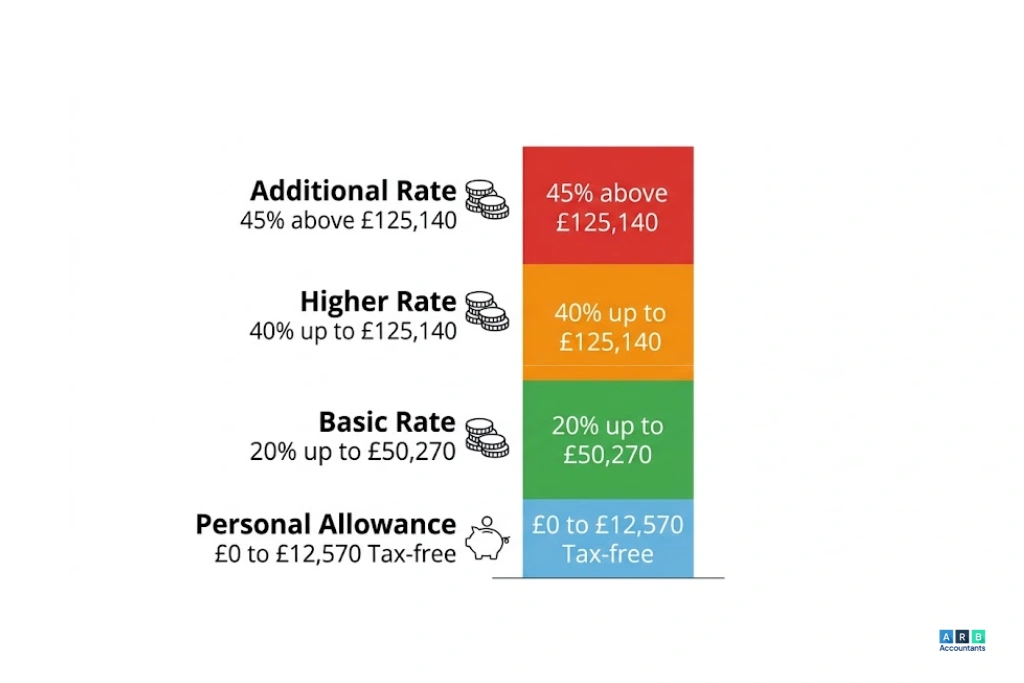
The personal allowance stays at £12,570. The higher rate threshold stays at £50,270. The additional rate threshold stays at £125,140. On paper, these look like no change. In practice, as your wages rise with inflation, more of your income is being dragged into higher tax bands without any new tax rate being introduced. This is fiscal drag, and it is one of the largest stealth tax increases in modern UK history.

Most business owners we speak to are surprised when they see how much this has affected them year on year. A pay rise that felt meaningful last year often delivers far less after tax than people expect, because a larger slice of earnings is now sitting in a higher band.

The spring budget 2026 confirmed this freeze is not going anywhere. If you are a sole trader, limited company director, or landlord earning above the basic rate threshold, this is worth factoring into your financial planning every single year, not just at Budget time.

Icon

READ RELATED ARTICLE: UK Personal Tax Allowance 2025/26

Dividend Tax Rises: What Business Owners Need to Know

Dividend Tax Rises: What Business Owners Need to Know

This is one of the most practical changes affecting business owners in 2026, and it came into effect in April.

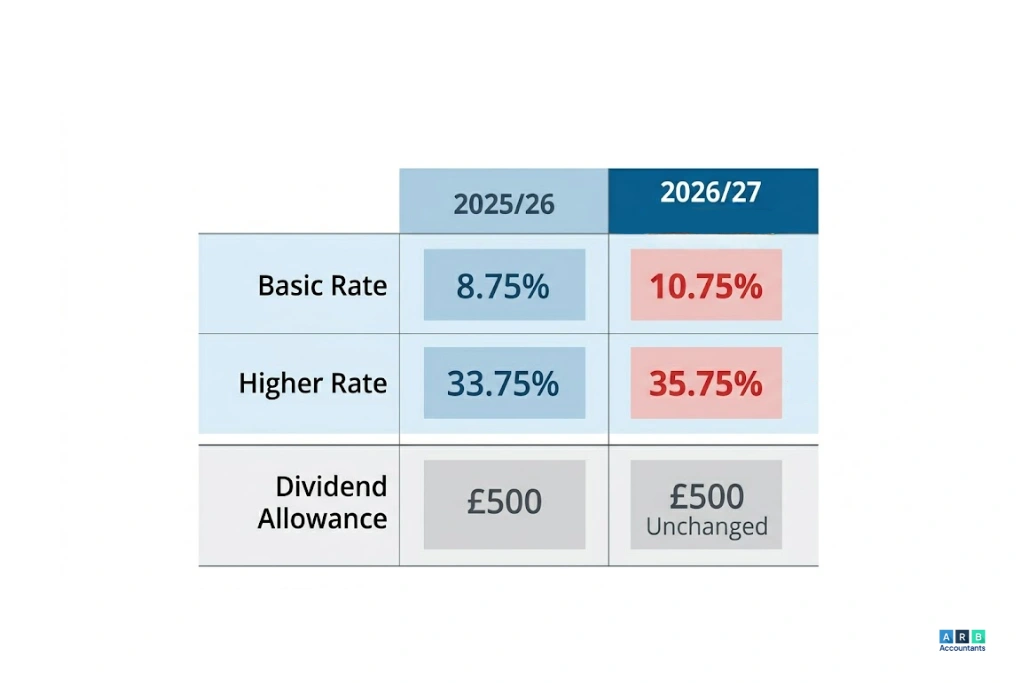
From 6 April 2026, the basic rate of dividend tax increased from 8.75% to 10.75%. The higher rate increased from 33.75% to 35.75%. The dividend allowance remains at £500 for 2026/27.

If you run a limited company and take a mix of salary and dividends, these increases directly affect your take-home pay. The changes were confirmed in the Autumn Budget 2025 and the spring budget 2026 made no adjustments to them.

The good news is there is still time to review how you structure your income. The split between salary and dividends can be optimised within the existing rules, and your pension can be a useful tool for reducing the taxable portion of your profits. If you have not spoken to an accountant about your remuneration structure this tax year, this particular change makes it well worth doing. Our guide to salary vs dividends walks through the key considerations for company directors.

Spring Budget 2026 ISA Allowance Updates: What Is Changing and When

The spring budget 2026 isa allowance updates generated significant interest ahead of the statement, but the actual announcement contained no new changes to the current allowances.

For 2026/27, the position remains as follows. Adults can still invest up to £20,000 per year across their ISAs. The Junior ISA limit holds at £9,000. The Lifetime ISA allowance remains at £4,000, which counts within the overall £20,000 adult limit.

However, the changes confirmed at the Autumn Budget 2025 are still coming from April 2027. The cash ISA limit will be cut from £20,000 to £12,000 for those under 65. The overall £20,000 limit stays the same, but the rule effectively requires that more of your allowance goes into investment-based ISAs rather than cash. People aged 65 and over are not affected by this specific restriction.

Alongside this, from April 2027, the rate of savings tax outside ISA wrappers will rise by 2 percentage points across all bands. That means the basic rate on savings interest rises from 20% to 22%, the higher rate from 40% to 42%, and the additional rate from 45% to 47%.

The message here is straightforward. If you hold significant cash savings outside of an ISA, use your 2026/27 allowance before April 2027. The window to maximise your full £20,000 cash ISA contribution at the current rules is open now, and it closes next April.

Spring Budget 2026 Stamp Duty: Where Things Stand for Property Owners

Spring Budget 2026 Stamp Duty: Where Things Stand for Property Owners

The spring budget 2026 stamp duty position is straightforward: nothing changed at the Spring Statement itself. The stamp duty holiday ended on 31 March 2025 as planned, and the thresholds reverted to their previous levels. No new adjustments were announced for 2026.

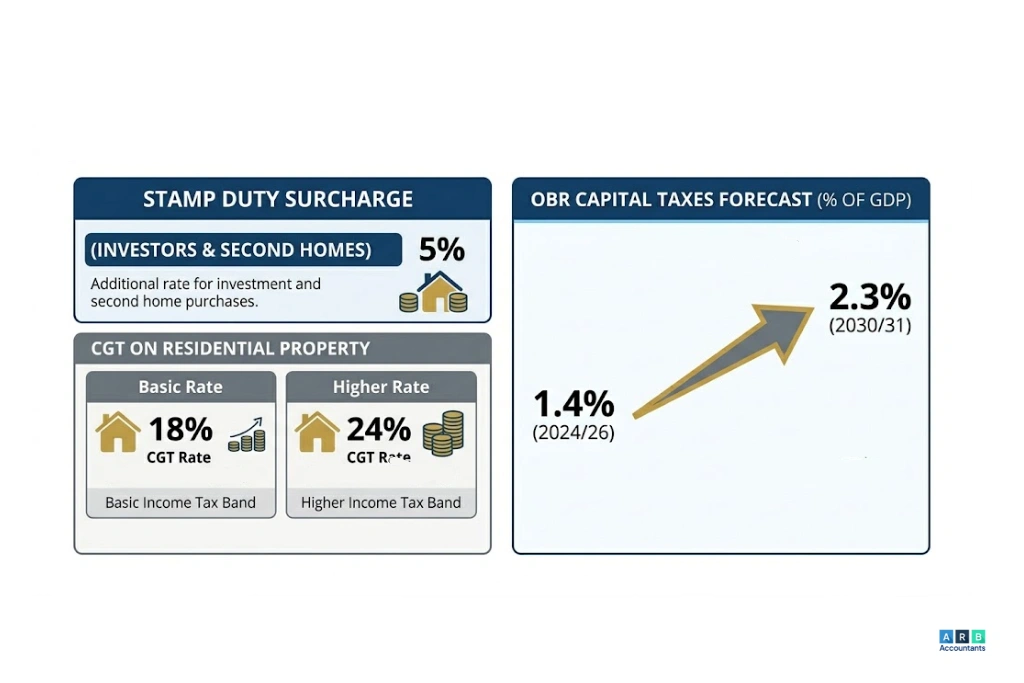
For landlords and property investors, the picture is still challenging. Buying a second property carries a 5% stamp duty surcharge, which applies on top of standard rates. Capital gains tax on residential property sits at 18% for basic rate taxpayers and 24% for higher rate taxpayers, following the increases confirmed at the Autumn Budget 2024.

The OBR’s own forecasts project that capital taxes as a share of GDP will increase from 1.4% in 2024/25 to 2.3% by 2030/31. That is a 64% increase over six years and reflects the combined effect of rising asset prices, frozen thresholds, and deliberate policy shifts. For landlords in particular, this trajectory makes proactive planning more important than ever.

A common situation we see at ARB is landlords who have not reviewed their property structures since the Section 24 mortgage interest changes took effect. If you hold property personally and are in the higher rate band, it is worth understanding how your tax liability is being calculated and whether your current structure is still the most efficient one available to you. Our landlord accountants work with property owners across Essex to help them stay compliant and plan ahead.

Making Tax Digital: The Change That Starts This April

Making Tax Digital: The Change That Starts This April

Separate from the spring budget news but impossible to ignore: Making Tax Digital for Income Tax (MTD for ITSA) begins in April 2026 for sole traders and landlords with income above £50,000.

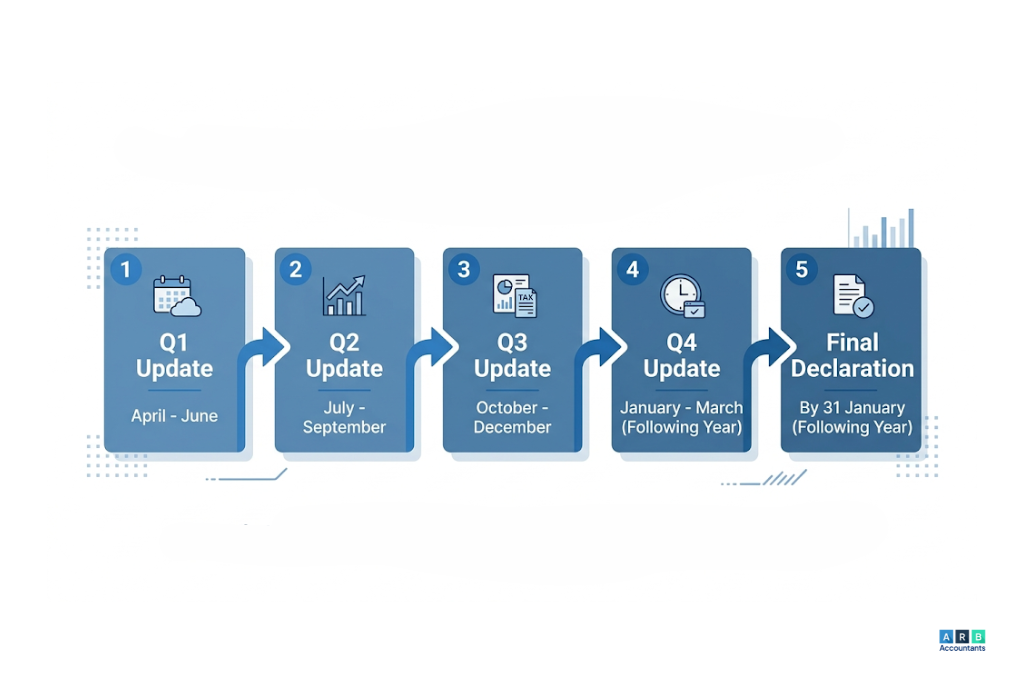
From 6 April 2026, if your self-employment or property income exceeds £50,000, you are required to use HMRC-approved software and submit quarterly updates. The January 31 final declaration deadline remains, but it now sits alongside four quarterly submissions throughout the year.

This is a significant operational change. HMRC has confirmed that it will not provide its own free software, so taxpayers will need to use third-party tools. The threshold drops to £30,000 from April 2027, and to £20,000 from April 2028, meaning that most sole traders and landlords will eventually be caught by this.

If you are not already using compatible software, this is urgent. The uk spring budget summary from March confirmed no easements to this timeline. Speak to your accountant now about whether you are in scope, which software to use, and how to prepare your records for quarterly filing. You can read more about what MTD for ITSA means in practice on our dedicated MTD guide.

Icon

READ RELATED ARTICLE: MTD for ITSA April 2026

Inheritance Tax: No U-Turn, But Planning Still Matters

The spring budget predictions ahead of March included strong speculation that the Chancellor might soften the inheritance tax changes announced in the 2025 Autumn Budget. That did not happen.

From April 2026, business property relief for shares listed on recognised exchanges such as AIM will be restricted to 50%. The IHT nil-rate band remains frozen at £325,000, where it has sat since 2009, with no movement planned until at least 2031.

From April 2027, inherited pension pots will also fall within the IHT net, representing a major shift for those using pension wealth as an estate planning tool. This is one of the most significant longer-term changes for individuals with accumulated pension savings.

The good news is that there is still a window to plan. Using your ISA allowance, reviewing pension strategy, considering gifting within the seven-year rule, and taking advice on business and agricultural property relief where it still applies are all legitimate tools. But they require action now, not after the rules tighten further. Our tax advice service covers estate and inheritance planning for business owners and individuals across Southend and Essex.

What Business Owners Should Do Right Now

The uk spring budget 2026 may have been quiet, but the tax environment around it is far from static. Here is what we recommend reviewing before the 2026/27 tax year gets into full swing.

Check your dividend structure. The new 10.75% and 35.75% rates are live from April 2026. If your salary-dividend split has not been reviewed recently, now is the time.

Use your ISA allowance. The full £20,000 annual limit is available for 2026/27. The cash ISA restrictions arrive in April 2027. Use the headroom while you have it.

Prepare for MTD. If your income is above £50,000 from self-employment or property, quarterly reporting is now mandatory. Get your software in place.

Review inheritance tax exposure. Frozen nil-rate bands, rising asset values, and the incoming pension changes mean more estates are moving into IHT territory every year. Early planning makes a real difference.

Plan around fiscal drag. Frozen thresholds until 2031 mean the same salary buys you less take-home each year. Pension contributions, salary sacrifice arrangements and other legitimate planning tools can help manage this.

The Bottom Line

The spring budget 2026 was deliberately low-key, and on the surface, that might feel reassuring. But the tax landscape for business owners, landlords and the self-employed is shifting steadily through a combination of Autumn Budget legacy changes, frozen thresholds, and confirmed future reforms.

Whether it is the new dividend rates, the upcoming ISA restructure, the MTD rollout, or inheritance tax exposure, there are real decisions to make before each of these deadlines arrives. The clients who tend to handle these changes well are the ones who plan early rather than react.

If you are based in Southend or the surrounding area and want to understand how these changes affect your specific situation, speaking with our team at ARB, one of the most trusted accountants in Essex, is a straightforward first step. We can review your current position, identify where you stand with the changes ahead, and help you make confident, informed decisions.

Tax rules can and do change, and any guidance in this article reflects our understanding as of publication. Always seek personalised advice for your specific circumstances.

Frequently Asked Questions

Down Arrow Up Arrow Did the spring budget 2026 announce any new tax rises? 

No. The spring budget statement 2026 on 3 March contained no new tax rises. The statement focused on updated OBR economic forecasts. However, significant changes from the 2025 Autumn Budget are still taking effect throughout 2026 and into 2027.

Down Arrow Up Arrow What happened to ISA allowances in the spring budget 2026? 

The spring budget 2026 ISA allowance updates confirmed no changes to current limits. The £20,000 annual ISA limit remains for 2026/27. Changes to cash ISA limits, which reduce the cash portion to £12,000 for under-65s, will take effect from April 2027.

Down Arrow Up Arrow Did the spring budget 2026 change stamp duty? 

No. There were no stamp duty changes announced at the spring budget 2026. Stamp duty reverted to its pre-holiday thresholds from April 2025, and that position was unchanged by the March 2026 statement.

Down Arrow Up Arrow What are the key tax changes actually happening in April 2026? 

From April 2026, dividend tax rates increased to 10.75% and 35.75% for basic and higher rate taxpayers respectively. Making Tax Digital for Income Tax became mandatory for those with income above £50,000. Business Asset Disposal Relief CGT rate increased to 18%. Corporation tax late filing penalties doubled.

Down Arrow Up Arrow Does the spring budget 2026 affect landlords? 

Yes, indirectly. No new landlord-specific measures were announced, but dividend tax rises affect landlords who hold property through limited companies, and the OBR has forecast rising capital tax receipts through to 2031, reflecting higher CGT, IHT and stamp duty revenues.

Down Arrow Up Arrow What is fiscal drag and how does it affect me? 

Fiscal drag happens when tax thresholds are frozen while incomes rise, pushing more income into higher tax bands without any change to the headline rates. The spring budget 2026 confirmed that the personal allowance and higher rate threshold will remain frozen until April 2031, meaning this effect will continue for the next five years.

About The Author

Saurabh Bedi

Saurabh Bedi

|

Director

Saurabh is a tax advisor at ARB Accountants, specialising in Self-Assessment and small business tax. He’s dedicated to making tax simple and stress-free, helping clients stay compliant and confident with HMRC.

Qualifications & Experience
  • Fellow of Chartered Certified Accountants (ACCA)
  • MSc Chartered Certified Accountancy 2008
  • Working in accountancy since 2008

Saurabh is a tax advisor at ARB Accountants, specialising in Self-Assessment and small business tax. He’s dedicated to making tax simple and stress-free, helping clients stay compliant and confident with HMRC.

Call Now Button