Leasing an Electric Car Through a Limited Company: The Full Tax Guide
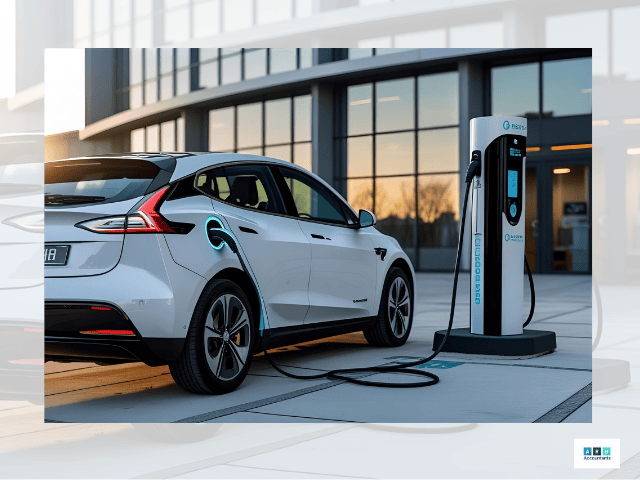
Electric vehicles (EVs) are no longer just an eco-friendly trend - they are a smart financial choice for businesses. Leasing an electric car through a limited company offers substantial tax savings while also providing a way for businesses to contribute to sustainability efforts.
Not only will your company be reducing its carbon footprint, but you can also benefit from significant tax incentives that make electric cars an attractive financial investment.
As businesses strive to align with the UK government’s environmental goals and take advantage of green initiatives, leasing an electric vehicle becomes a strategic move. With rising fuel costs and the growing push for carbon neutrality, businesses can leverage electric vehicle leases as a means to lower operational costs and enhance their corporate social responsibility profile.
If you’re a contractor managing company vehicles or EV leases, our specialist contractor accountants can help you navigate the tax rules with confidence. For directors of trading limited companies, our limited company accountants handle the same questions every week.
About to sign a company car lease? Talk to us first.
Getting the structure wrong can mean unnecessary tax charges for both you and your company. Our accountants check your position before you commit.
Table Of Contents
- What Are the Key Benefits of Leasing an EV Through a Limited Company?
- What Are the Tax Benefits of Leasing an Electric Car Through a Limited Company?
- How Does HMRC Handle VAT on Electric Car Leases?
- What Is Electric Car Corporation Tax Relief?
- How Does Company Car Tax Apply to Electric Vehicles?
- Are There Special Tax Benefits for Leasing an Electric Van?
- What Are the Rules for EV Charging and Reimbursement?
- What Support Does the Workplace Charging Scheme Offer?
- Lease vs Buy: Which Is Better for an Electric Car?
- How Can Your Limited Company Save with EV Grants and Charging Support?
- What Leasing Options Are Available for Electric Vehicles Through a Limited Company?
- Should I Buy or Lease an Electric Vehicle As A Limited Company?
- How ARB Accountants Can Help
- Frequently Asked Questions
What Are the Key Benefits of Leasing an EV Through a Limited Company?
Leasing an electric vehicle (EV) through your limited company isn’t just a nod to sustainability - it’s a powerful financial strategy. Here’s a quick overview of the most impactful benefits your business can gain from making the switch:
How Can Leasing an EV Provide Significant Tax Savings?
Leasing an EV unlocks a variety of tax advantages, including reduced Benefit-in-Kind (BIK) tax rates, deductible lease payments against corporation tax, and partial or full VAT recovery. These incentives combine to substantially reduce the overall cost of using an electric vehicle.
Do Electric Cars Have Lower Operational Costs for Businesses?
Electric vehicles have fewer moving parts and generally cost less to maintain than petrol or diesel alternatives. Charging costs are often cheaper than fuel, especially if charging infrastructure is installed on-site. This means ongoing savings in addition to the tax benefits.
Freelancers switching to EVs also benefit from tailored tax advice, our Accountants for Freelancersservice ensures you claim every allowance correctly.
What Government Incentives Are Available for EV Leasing?
UK government initiatives like the Electric Car Grant (relaunched in 2025 with up to £3,750 off eligible cars under £37,000) and the Workplace Charging Scheme reduce upfront costs and support infrastructure investments, making EVs more affordable and practical for businesses of all sizes.
How Does Leasing an EV Improve Corporate Social Responsibility (CSR)?
Driving an EV reflects your company’s commitment to environmental sustainability. It helps reduce your carbon footprint and positions your brand as forward-thinking and eco-conscious - something that customers, investors, and employees increasingly value.
What Are the Tax Benefits of Leasing an Electric Car Through a Limited Company?
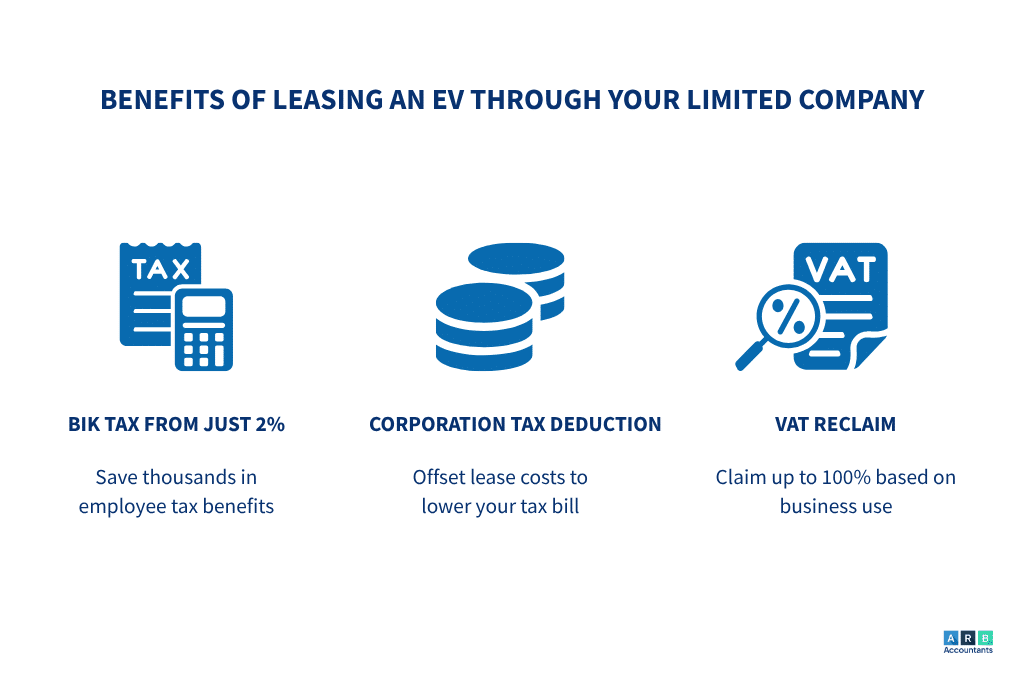
Leasing an electric vehicle (EV) through your limited company not only supports your sustainability goals but also offers significant tax advantages. The UK government has introduced several tax benefits, incentives, and green tax relief schemes that make EV leasing an attractive option for businesses. Here’s a breakdown of the key benefits:
What Is Benefit-in-Kind (BIK) Tax Reduction for Electric Cars?
When you provide a company car, Benefit-in-Kind (BIK) tax applies. This is the tax employees (including business owners) pay for using a company car for personal use. The amount of tax depends on the car’s value, its emissions, and how much personal use the employee has.
-
Current Rate (2026/27): The Benefit-in-Kind (BIK) rate for fully electric vehicles is 4% in the 2026/27 tax year, applied to the car’s P11D value. It was 3% in 2025/26 and 2% in 2024/25.
-
Upcoming Changes: The BIK rate rises by 1 percentage point each year to 5% in 2027/28, then accelerates by 2 percentage points a year — 7% in 2028/29 and 9% in 2029/30 — under the schedule confirmed at the Autumn Budget 2024. Even at 9%, EVs remain significantly more tax-efficient than traditional petrol or diesel cars, which attract BIK rates up to 37%.
Example: If your company car is valued at £30,000, the annual BIK taxable value at the 4% rate (2026/27) is £1,200, rising to £1,500 in 2027/28 and £2,100 in 2028/29 — still far less than the tax for a petrol or diesel car of the same value.
Source: For detailed information on BIK rates and calculations, refer to thePod Point Guide.
How Does Leasing an EV Help Reduce Corporation Tax?
-
Deductible Expenses: Lease payments for electric vehicles are considered deductible operating expenses. This means the full monthly rental payments can be offset against your company’s taxable profits, effectively reducing your corporation tax liability.
-
Example: If your company leases an electric vehicle at £6,000 per year, and your corporation tax rate is 19%, you could save £1,140 annually in tax.
Source: For more details on corporation tax implications, see theTHP Guide.
Can a Limited Company Reclaim VAT on Electric Car Leasing?
VAT (Value Added Tax) is a tax that businesses pay on most goods and services. When you lease an electric car through your company, you can reclaim a portion of the VAT you pay on the lease.
-
Standard VAT Recovery: When leasing an electric vehicle for business purposes, your company can reclaim 50% of the VAT on the lease payments, provided the vehicle is used for both business and personal use.
-
Full VAT Recovery: If the vehicle is used exclusively for business purposes, you may be eligible to reclaim 100% of the VAT. This is particularly advantageous for businesses that can demonstrate the vehicle’s sole use for business activities.
Example: If your lease payment is £6,000 annually, the VAT would be £1,200. Reclaiming 50% would save your company £600 each year.
Source: For comprehensive information on VAT recovery, refer to the VAT recovery guide.
Do Electric Cars Pay Vehicle Excise Duty (VED)?
Vehicle Excise Duty (VED), commonly known as road tax, is typically paid annually for using a vehicle on public roads.
-
Standard Rate: From 1 April 2025, electric vehicles are subject to VED. The standard rate is £200 per year for 2026/27 (was £195 in 2025/26).
-
First-Year Rate: New electric vehicles registered on or after 1 April 2025 pay the lowest first-year rate of £10.
-
Expensive Car Supplement: From 1 April 2026, the threshold for fully zero-emission cars rose from £40,000 to £50,000. EVs with a list price above £50,000 incur an additional £440 per year for five years, starting from the second year of registration. Cars registered before 1 April 2026 with a list price between £40,000 and £50,000 still fall under the older threshold.
How Does HMRC Handle VAT on Electric Car Leases?
One of the biggest considerations when leasing an electric car through a limited company is how VAT is handled. HMRC rules allow businesses to reclaim part - or in some cases all - of the VAT paid on lease rentals.
-
50% VAT Reclaim: If the EV is used for both business and personal journeys, you can usually reclaim 50% of the VAT on the lease.
-
100% VAT Reclaim: If you can prove the vehicle is used solely for business purposes, HMRC permits a full VAT reclaim.
For example, if your annual lease payments total £12,000, and VAT is £2,400, your company could reclaim £1,200 under the 50% rule. That’s a significant saving that reduces the overall cost of your electric car business lease.
This makes VAT recovery one of the most practical electric car lease tax benefits for limited companies looking to optimise cash flow.
What Is Electric Car Corporation Tax Relief?
In addition to VAT, there are corporation tax savings available when you lease electric vehicles. Lease payments are treated as an operating expense, which means they can reduce your company’s taxable profits.
Let’s say your business spends £8,000 annually on an electric car business lease. If your corporation tax rate is 25%, that’s a direct saving of £2,000 in reduced tax liability.
This form of electric car corporation tax relief can help companies free up cash for other investments while still supporting a greener fleet strategy. It’s one of the lesser-known but powerful incentives behind electric car company tax benefits.
How Does Company Car Tax Apply to Electric Vehicles?
When it comes to providing a company car, the Benefit-in-Kind (BIK) rate is critical. Electric vehicles attract a far lower BIK compared to petrol or diesel alternatives.
-
Current Rate (2026/27): 4% BIK for fully electric vehicles, applied to the car’s P11D value.
-
Future Rates: Rising to 5% in 2027/28, 7% in 2028/29 and 9% in 2029/30 (per the Autumn Budget 2024 schedule). Still much lower than traditional cars.
This means directors and employees driving a leased electric vehicle enjoy much lower personal tax bills. For instance, a £40,000 EV under the 2026/27 4% rate results in a £1,600 taxable benefit — far less than a similar petrol car.
If you’re weighing up company car options, the reduced electric car BIK makes EVs a no-brainer for businesses seeking to reward staff while keeping costs manageable.
Not sure how the BIK charge will affect your personal tax bill?
We calculate the exact cost for your situation and make sure your company claims the right deductions. Get in touch before you sign.
How Much Will You Actually Save? A Real Example
Let’s put some numbers on it. Say you’re a 40% taxpayer and you’re looking at a fully electric car with a P11D value of £40,000.
| Electric Car | Petrol Equivalent | |
|---|---|---|
| P11D value | £40,000 | £40,000 |
| BIK rate (2025/26) | 3% | 28% |
| Taxable benefit | £1,200 | £11,200 |
| Income tax you pay (40%) | £480 per year | £4,480 per year |
| Company Class 1A NI (15%) | £180 per year | £1,680 per year |
| Your monthly personal tax cost | £40 per month | £373 per month |
The difference is significant. As a 40% taxpayer, driving a £40,000 electric company car costs you £40 per month in personal tax. The same car with a petrol engine would cost over £370 per month. Over a three-year lease, that’s a personal tax saving of around £12,000.
Your company also pays less. The lower BIK value means a smaller Class 1A National Insurance liability each year. And if your company is VAT registered, you can reclaim 50% of the VAT on the lease payments where there is any private use, or 100% if the car is used exclusively for business.
These figures are based on 2025/26 rates (BIK 3%, Class 1A NI 15%). The BIK rate rises 1 percentage point each year to 5% in 2027/28, then accelerates to 7% in 2028/29 and 9% in 2029/30 under the Autumn Budget 2024 schedule. So the savings narrow over the life of a typical 3- or 4-year lease but remain substantial compared to petrol and diesel. For a fuller view of what you keep across salary, dividends and the company car, our salary vs dividends guide shows where each lever fits.
Are There Special Tax Benefits for Leasing an Electric Van?
Electric vans offer similar advantages to cars, with additional benefits for businesses that depend on transportation or deliveries.
-
Grants Available: The UK’s Plug-in Van Grant can reduce upfront costs significantly.
-
Tax Relief: Lease rentals are deductible against corporation tax, just like cars.
-
Operational Savings: Lower running costs make EV vans particularly attractive for logistics-heavy companies.
A electric van lease not only cuts emissions but also signals to customers that your business is committed to sustainability. For trades, delivery services, or SMEs, vans can be more than just vehicles - they can be a brand statement.
What Are the Rules for EV Charging and Reimbursement?
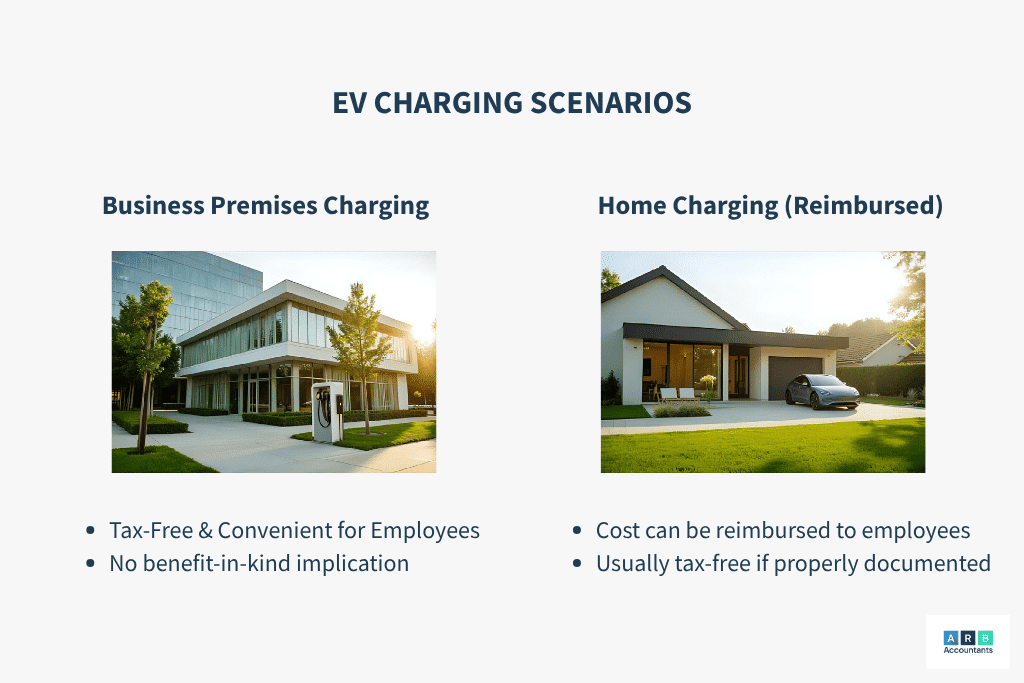
Electric vehicle charging expenses whether at home or at the business premises can offer tax advantages when managed properly. Here’s how businesses can handle and benefit from EV charging costs:
What Charging Costs Can a Business Claim for EVs?
When it comes to charging the electric vehicle, the costs can also offer some tax benefits:
-
Business Charging: Charging an electric vehicle at your business premises is generally not subject to tax.
-
Home Charging: If employees charge the vehicle at home, the company can reimburse the cost, which is typically considered a tax-free benefit.
Can a Company Reclaim Electricity Costs for EV Charging?
Charging an electric vehicle is an ongoing expense that should be factored into your company’s budget. Whether the EV is charged at your business premises or an employee’s home, electricity costs can accumulate - but there are tax-efficient ways to manage them.
-
Tax Deductibility: The good news is that businesses can deduct electricity costs related to charging the vehicle for business purposes from their taxable profits. Whether the vehicle is charged at the office or an employee’s home, the business can cover the electricity cost.
-
Example: If employees need to charge the vehicle at home, the company can reimburse the cost of electricity used for charging, and this reimbursement is typically tax-free.
Source: For more details on how HMRC handles fuel and electricity costs for company cars, refer to HMRC’s Advisory Fuel Rates for electric vehicles.
What About Charging at Home and at Work?
Charging costs are a separate consideration from the lease itself, and the rules here are actually very favourable for limited company directors.
Charging at your company premises
If your company installs a charging point at your business premises, the cost is fully deductible against corporation tax planning. There is no Benefit in Kind charge on workplace charging provided through a dedicated company charge point. This means if your employees or you as a director charge an electric company car at work, no personal tax applies.
Charging at home
If your company pays to install a home charge point for a director or employee who has a company car, this is treated as a separate benefit. HMRC currently exempts employer-provided workplace charging from BIK, but home charge point installation is subject to its own rules. The key distinction is between the equipment and the electricity costs.
If your company reimburses you for electricity used to charge a company car at home, HMRC treats this as a benefit in kind unless it is reimbursed at or below the Advisory Electricity Rate (AER). HMRC publishes the AER quarterly. From 1 March 2026 the rate is 7 pence per mile for home charging and 15 pence per mile for public charging — the home/public split was introduced in September 2025, so an older “single 9p rate” you may see quoted online is out of date. Reimbursing at the published rate or below means no BIK charge applies.
These rules are worth checking before you set anything up. Getting the reimbursement structure wrong is a common mistake we see when directors start driving company EVs.
What Support Does the Workplace Charging Scheme Offer?
One common barrier to EV adoption is charging infrastructure. That’s where the Workplace Charging Scheme (WCS) steps in.
This government-backed initiative provides a grant covering up to 75% of the cost of installing EV charge points, capped at £350 per socket. Even if you’re only just beginning your electric car business lease, you can still apply for support.
For businesses, installing charge points:
-
Encourages employees to switch to EVs.
-
Reduces reliance on public chargers.
-
Strengthens your green credentials.
Pairing an electric car lease tax benefits strategy with the Workplace Charging Scheme ensures both financial and operational advantages.
Should Your Company Lease or Buy the Electric Car?
Most directors ask this at some point. The answer depends on your company’s cash position, profit levels, and whether you want to own the car at the end of the term. Here’s how the two routes compare on tax:
| Leasing (Business Contract Hire) | Buying Outright | |
|---|---|---|
| Corporation tax relief | Monthly payments fully deductible | 100% first-year capital allowance on new EVs |
| VAT reclaim | 50% on finance element (part personal use) | 50% on purchase price (part personal use) |
| Cash required upfront | Initial rental only | Full purchase price or finance deposit |
| Ownership at end | No | Yes |
| Residual value risk | None (company returns car) | Yes (company owns depreciating asset) |
| Flexibility | Fixed term, mileage limits apply | Keep as long as needed |
For most directors running a profitable limited company, leasing is the cleaner option. You get full deductions every month without tying up capital, and you return the car at the end without worrying about what it’s worth. Buying makes more sense if your company has significant profits to shelter in year one and you want to use the first-year allowance to reduce a large corporation tax bill quickly.
If you’re unsure which route suits your company’s specific position, it’s worth speaking to an accountant before committing. Our tax advice service can model both routes against your numbers. The decision is not just about tax rates; it is about what works for your cash flow and your business plan.
How Can Your Limited Company Save with EV Grants and Charging Support?
The UK government offers various grants and incentives to make the transition to electric vehicles more affordable for businesses. These initiatives not only help reduce the upfront costs but also support businesses in their commitment to a greener future.
What Is the Electric Car Grant (ECG) and Who Can Claim It?
The original Plug-in Car Grant (PiCG) was withdrawn in June 2022. In its place, the government launched the Electric Car Grant (ECG) in 2025 — relaunched and topped up at the Autumn Budget 2025 with £1.3 billion of funding committed through to 2030.
-
Grant Amount: Up to £3,750 off Band 1 cars, or £1,500 off Band 2 cars. The band is set by the Department for Transport based on the manufacturer’s supply-chain emissions and use of renewable energy in production.
-
Price Cap: Cars must have a list price at or below £37,000 to qualify. This excludes most premium EVs but covers the bulk of mass-market models.
-
Other Criteria: Eligible cars must meet warranty and battery-range thresholds set by DfT.
-
How to Claim: The discount is applied automatically at the point of sale by participating dealers. You don’t apply for it yourself — the manufacturer applies for grant eligibility and the dealer handles the deduction.
-
Source: See the official Electric Car Grant page on find-government-grants.service.gov.uk for the current list of eligible cars.
What This Means for You
If you’re leasing a car (which is what most directors do), the ECG benefit usually flows through into the monthly lease price set by the lease provider — you don’t claim it directly. If you’re buying a qualifying car outright through your company, the dealer applies the discount on the invoice. Either way, the cap means the ECG is most relevant for sub-£37k models like the Renault 5 E-Tech, Cupra Born, MG4, Vauxhall Frontera Electric and similar — not the Tesla Model Y or premium German EVs.
For commercial vehicles, the Plug-in Van Grant (PIVG) has been extended into 2026/27 with up to £2,500 off small vans (under 2.5 tonnes) and up to £5,000 off larger vans (2.5–4.25 tonnes), capped at 1,500 grants per customer per year.
How Does the Workplace Charging Scheme (WCS) Help Businesses?
The Workplace Charging Scheme offers businesses a grant to install electric vehicle charging points at their premises.
-
Grant Details: Businesses can receive a 75% grant for the cost of installing charging points, with a maximum grant of £350 per socket. This is a great opportunity for businesses to reduce their upfront costs when setting up charging stations for their electric vehicle fleet.
-
Stat: Since its launch in 2016, the Workplace Charging Schemehas funded over 57,000 charging points across the UK, making it an invaluable resource for businesses transitioning to electric vehicles.
-
Source: For further information and to apply, visit theElectric Vehicle Charging Device Grant Scheme Statistics.
What This Means for You
If you want to install EV charging infrastructure at your office, WCS can significantly lower setup costs. You can apply even if you lease your EVs, and you don’t need to have EVs already in the fleet to qualify.
What Leasing Options Are Available for Electric Vehicles Through a Limited Company?
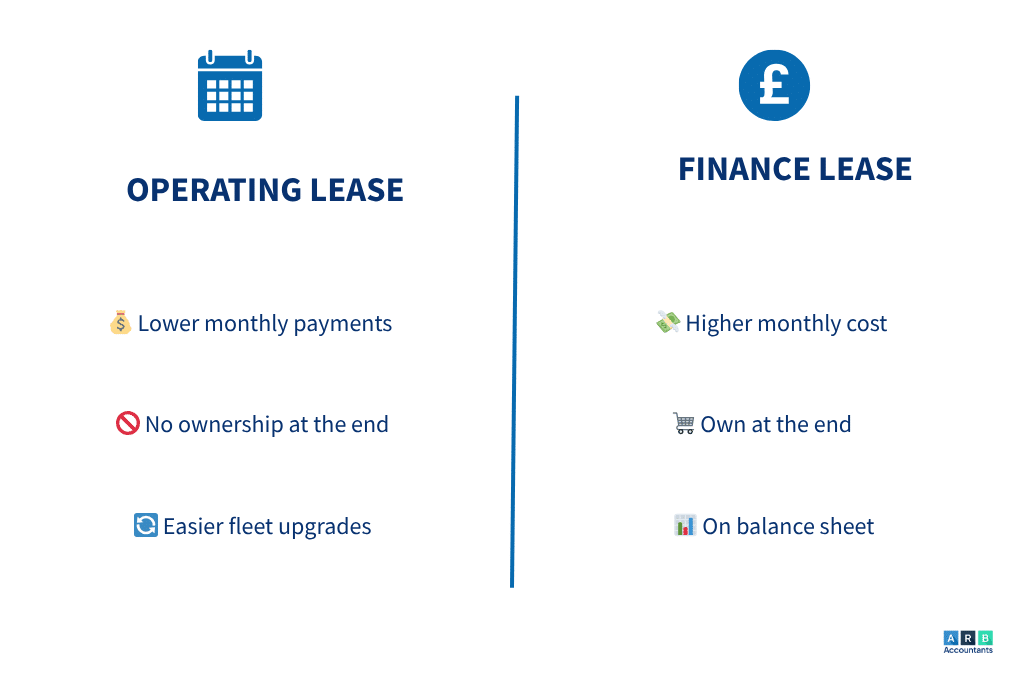
When it comes to leasing an electric vehicle through your limited company, there are two primary options: Operating Lease (Contract Hire) and Finance Lease. Each has its own set of benefits and considerations, depending on your business’s needs and financial strategy.
Here’s a detailed explanation of the two primary leasing options available for UK businesses considering electric vehicle (EV) leasing:
What Is an Operating Lease (Contract Hire) for EVs?
An Operating Lease, commonly known as Contract Hire, is a straightforward leasing arrangement where your business rents the vehicle for a fixed period, typically 2 to 4 years, with regular monthly payments.
Key Features:
-
No Ownership: At the end of the lease term, you return the vehicle to the leasing company. There is no option to purchase the vehicle.
-
Fixed Monthly Payments: Payments are typically lower than finance leases, making it easier to manage cash flow.
-
Maintenance Packages: Many operating leases include maintenance and servicing, reducing unexpected costs.
-
Tax Efficiency: Lease payments are fully deductible as operating expenses, reducing your company’s taxable profits thereby saving corporation tax.
-
VAT Benefits: If the vehicle is used exclusively for business purposes, you can reclaim 100% of the VAT on the lease payments. If it’s used for both business and personal purposes, you can reclaim 50% of the VAT.
Ideal For:
-
Businesses that prefer to avoid the risks associated with vehicle ownership.
-
Companies looking to regularly update their fleet with the latest models.
-
Firms seeking predictable monthly expenses without the hassle of vehicle depreciation.
What Is a Finance Lease for EVs?
A Finance Lease is a more complex arrangement where your business leases the vehicle with an option to purchase at the end of the term.
Key Features:
-
Balance Sheet Asset: The vehicle appears on your company’s balance sheet, and you are responsible for its maintenance and insurance.
-
Depreciation: You can claim depreciation on the vehicle, potentially reducing taxable profits.
-
Option to Purchase: At the end of the lease term, you have the option to purchase the vehicle for a nominal fee.
-
Higher Monthly Payments: Payments are typically higher than operating leases, reflecting the option to purchase.
-
VAT Benefits: Similar to operating leases, you can reclaim VAT on lease payments based on the business use percentage.
Ideal For:
-
Businesses that plan to keep the vehicle for a longer period.
-
Companies seeking to eventually own the vehicle.
Firms that prefer to manage the vehicle’s maintenance and insurance directly.
How Do Operating and Finance Leases Compare for EVs?
| Feature | Operating Lease (Contract Hire) | Finance Lease |
|---|---|---|
| Ownership | No | Yes (with option to purchase) |
| Balance Sheet Impact | No | Yes |
| Maintenance Responsibility | Leasing company | Business |
| Depreciation | Not applicable | Applicable |
| VAT Reclaim | 50%-100% based on usage | 50%-100% based on usage |
| Monthly Payments | Lower | Higher |
| End-of-Term Options | Return vehicle | Purchase vehicle |
Which Lease Type Is Best for My Limited Company?
The choice between an operating lease and a finance lease depends on your business’s specific needs and financial strategy:
-
Choose an Operating Lease if you prefer lower monthly payments, regular fleet updates, and minimal responsibility for vehicle maintenance and depreciation.
-
Opt for a Finance Lease if your business plans to keep the vehicle for an extended period, desires ownership, and is prepared to manage maintenance and depreciation.
It’s advisable to consult with a financial advisor or leasing expert to determine the best option for your business’s circumstances.
If you have any further questions or need assistance in selecting the right leasing option for your electric vehicle needs, feel free to ask!
ARB sorted out my company accounts and made sure I was extracting money in the most tax-efficient way. I had no idea how much I was overpaying until they showed me. Would highly recommend to any limited company director.
Why Leasing is a Great Option for Limited Companies
Leasing an electric vehicle (EV) through your limited company offers several advantages that make it a smart choice, especially when it comes to managing your finances, cash flow, and vehicle fleet. Here’s why leasing is a great option for businesses:
Flexibility and Cash Flow Management
Leasing avoids large upfront costs and spreads payments into predictable monthly instalments. This helps you preserve cash flow and allocate capital to other areas of your business, especially useful for growing companies.
No Depreciation Worries
With leasing, you don’t worry about your car losing value. Just return the vehicle at the end of the term and upgrade to a newer model - no resale hassles, no loss on investment.
Predictable Costs
Leasing gives you fixed monthly costs, making budgeting easier. Many leases include maintenance and servicing, helping you avoid unexpected repair bills and ensuring smooth operations.
If your business wants deeper compliance checks, our tax investigation accountants can review your EV-related claims to ensure full HMRC accuracy.
How ARB Accountants Can Help
Leasing an electric vehicle through your limited company can unlock major tax savings, from Benefit-in-Kind (BIK) reductions to VAT reclaims and corporation tax deductions. But making the most of these incentives requires the right strategy.
At ARB Accountants, we specialise in helping UK businesses navigate the complexities of EV leasing. Whether you’re deciding between an Operating Lease or Finance Lease, or trying to reclaim VAT correctly, we’ll guide you through the process and tailor our advice to your specific setup.
We also offer full accounting support to keep your business compliant and tax-efficient:
-
Corporation tax planning to claim all eligible EV-related expenses
-
Accurate VAT reclaims on lease payments and charging costs
-
Smart financial strategy to help you plan and grow with confidence
Let’s make sure your EV lease works for your business, not against it. Get in touch with ARB Accountants Southend today to explore your best options and start saving.
Before You Sign the Lease: What to Check
Before your company commits to a lease agreement, it’s worth running through these points. We go through all of these with our clients before they sign anything.
- Confirm the car’s P11D value and calculate your personal BIK charge before signing, not after.
- Check whether the car will be used exclusively for business or also for personal journeys. This affects both your VAT reclaim and your BIK liability.
- Confirm your company is VAT registered and understand the 50% VAT rule on leased cars with personal use.
- Check if your company qualifies for 100% first-year capital allowances if buying rather than leasing.
- Confirm the lease agreement specifies business contract hire, not personal contract hire, as the tax treatment differs.
- Check whether the contract includes maintenance. VAT on maintenance is usually fully reclaimable.
- Consider a home charge point and confirm the reimbursement structure with your accountant to avoid an unintended BIK charge.
- Check the mileage limits on the lease. Excess mileage charges can add up quickly on a business vehicle.
Want to confirm this works for your company before you sign? Our accountants check your tax position, calculate the BIK impact, and make sure the lease is structured correctly. Get in touch with our limited company team today.
Frequently Asked Questions
Can I lease an electric car through my limited company?
Yes. Your limited company can enter into a business contract hire agreement for an electric car. The lease payments are treated as a business expense and reduce your corporation tax liability. If the car is also used for personal journeys, a Benefit in Kind charge applies, but at 3% in 2025/26 the tax cost is far lower than it would be for a petrol or diesel company car. Speak to our limited company accountants if you want to confirm the position before you commit.
What is the Benefit in Kind rate for electric cars in 2025/26?
The BIK rate for fully electric company cars is 3% in 2025/26, applied to the car’s P11D value. HMRC has confirmed the rate rises by 1 percentage point each tax year, reaching 5% in 2027/28. Even at these rising rates, electric cars are far more tax-efficient as company cars than petrol equivalents, which attract BIK rates of 20% to 37% depending on emissions.
Is it better to lease or buy an electric car through a limited company?
Leasing is often more tax-efficient because the full monthly payment is a deductible business expense. Buying outright allows your company to claim 100% first-year capital allowances on a new electric vehicle, offsetting the full cost against profits in year one. Which option is better depends on your company’s cash flow, profit levels, and whether you want to own the car at the end. Our tax advice service can work out which route makes more financial sense for your company.
Can I claim VAT on an electric car leased through my limited company?
If the car is used exclusively for business with no private use, your company can reclaim 100% of the VAT on the lease payments. In practice, most company cars have some private use, in which case you can reclaim 50% of the VAT on the finance element of the lease. VAT on any maintenance element in the lease is usually fully reclaimable. Your exact VAT position depends on how the car is used, so it is worth confirming with an accountant.
What happens if I use the company electric car for personal journeys?
Personal use triggers a BIK charge. You pay income tax on 3% of the car’s P11D value in 2025/26 (4% in 2026/27), and your company pays Class 1A National Insurance at 15% on the same amount (the rate rose from 13.8% to 15% from 6 April 2025). For a £40,000 car at the 2025/26 rate, the BIK value is £1,200 per year. At 40% income tax, that’s £480 per year in personal tax, or £40 per month. The charge is modest compared to petrol or diesel equivalents and well worth it given the corporation tax saving on the lease payments.
How can leasing an EV provide significant tax savings?
Leasing an EV unlocks several tax advantages: reduced BIK rates, lease payments deductible against corporation tax, and partial or full VAT recovery depending on the vehicle’s usage. Combined, these can take the effective cost of running a £40,000 electric company car down to around £40 per month in personal tax for a higher-rate taxpayer.
Do electric cars have lower operational costs for businesses?
Yes. Electric vehicles generally cost less to maintain because they have fewer moving parts than petrol or diesel cars. Charging costs are also typically lower than fuel costs, especially when you can charge at on-site infrastructure or take advantage of off-peak electricity tariffs at home.
How does leasing an EV help reduce corporation tax?
Lease payments for electric vehicles are treated as deductible operating expenses. The full monthly rental payment can be offset against your company’s taxable profits, lowering the overall corporation tax liability. On a £6,000-a-year lease at the 25% corporation tax rate, that’s £1,500 of tax saved per year before you even count the BIK savings or the VAT reclaim.
What support does the Workplace Charging Scheme (WCS) offer?
The WCS is a government grant covering up to 75% of the cost of installing EV charge points at business premises, capped at £350 per socket. It exists to support charging infrastructure development and is available to most VAT-registered businesses, including those that lease their EVs rather than buy them.
Are there any grants available for electric vehicle charging at home?
Most direct consumer grants for home charge points have ended, but specific groups still qualify. Drivers in flats and rented accommodation can apply for the EV chargepoint grant, and businesses can fund the home charge points of company-car drivers under the Workplace Charging Scheme rules in some cases. The HMRC treatment of any reimbursement also matters — see our notes on home charging above.
What is the impact of EV leasing on company cash flow?
Leasing preserves company capital compared to an outright purchase. You pay a fixed monthly rental rather than the full cost of the car upfront, which makes budgeting easier and frees cash for other parts of the business. There’s also no depreciation risk on the company balance sheet — the lease company carries it.
Can I lease a Tesla through a limited company?
Yes. Any fully electric car can be leased through a limited company under a business contract hire agreement, including Tesla, Polestar, BMW i-series, BYD, and the rest. The 3% BIK rate in 2025/26 applies to all fully electric vehicles regardless of brand, so the tax treatment is the same whether you lease a Model 3, a Model Y, or any other EV.
BIK rates for electric cars are rising by 1 percentage point each year from 2026/27. The savings available now will still be there in future years, but they are at their largest in 2025/26. If you are considering a company EV lease this year, it makes sense to get the structure right before you sign.
Ready to lease an electric car through your company?
Our accountants confirm the tax position, calculate your BIK charge, and make sure the lease is structured to give you the maximum benefit. Contact ARB today.
About The Author

Saurabh Bedi | Director
Saurabh is a tax advisor at ARB Accountants, specialising in Self-Assessment and small business tax. He's dedicated to making tax simple and stress-free, helping clients stay compliant and confident with HMRC.
Qualifications & Experience
- Fellow of Chartered Certified Accountants (ACCA)
- MSc Chartered Certified Accountancy 2008
- Working in accountancy since 2008